AI Won’t Fix a Broken Design System. It’ll Amplify It.

Two years ago, getting a new screen designed meant a brief, a sprint, and a review meeting. Today it can mean typing a prompt and having ten variations by lunch. Every design tool worth its subscription fee now has some flavor of AI built in — prototyping assistants, code generators, full-flow mockup builders. It’s fast. It’s a little seductive. And according to the most detailed look yet at how design systems are actually holding up in 2026, that speed is exposing something design teams have quietly been living with for years: most design systems weren’t ready for this kind of velocity, because most of them were never fully adopted in the first place.
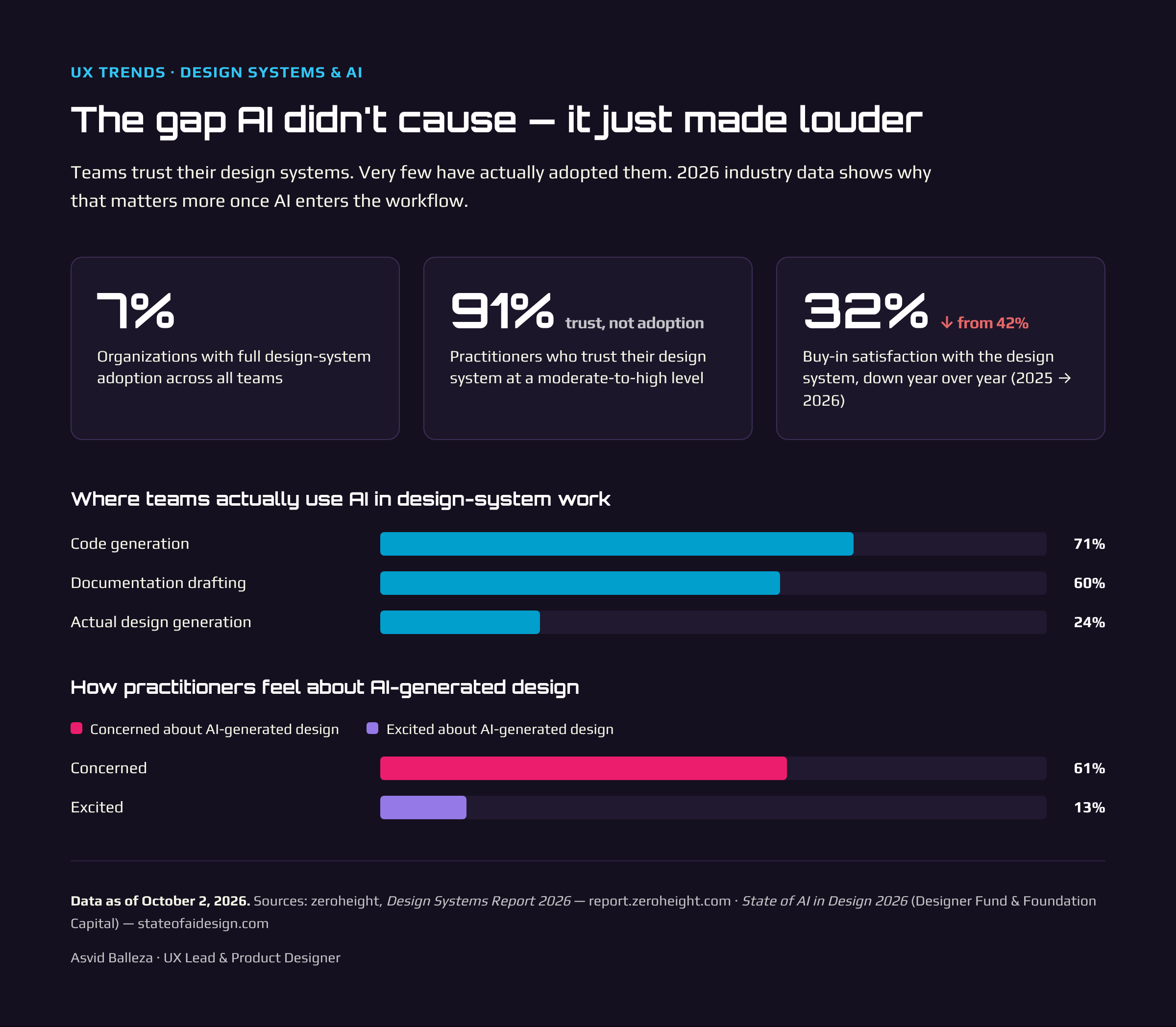
That’s the real headline buried in zeroheight’s Design Systems Report 2026, and it deserves more attention than the AI angle usually gets. Only 7% of organizations report full design-system adoption across all teams; another 38% call it moderate. Buy-in satisfaction actually fell year over year, from 42% in 2025 to 32% in 2026, and 61% of design-system teams say they’re under-resourced to do the governance work in the first place — even though 91% of practitioners say they trust their systems at a moderate-to-high level. The report frames that gap directly: “Trust isn’t the bottleneck. Something else is.”. Adoption is an organizational problem, not a technical one, and that’s exactly why AI doesn’t fix it. AI doesn’t touch organizational problems at all — it just runs faster on top of whatever org structure is already there, good or broken.
Only about one in ten teams report AI genuinely built into their day-to-day process — the rest are still experimenting or holding off entirely. And where it is being used, it’s overwhelmingly for the practical, low-risk stuff: 71% of AI use among design-system teams is code generation, 60% is drafting documentation — not making actual design decisions, which sits at just 24%. Practitioners are routing AI toward the lowest-risk tasks almost on instinct: 61% say they’re concerned about AI-generated design, and only 13% say they’re excited about it. A separate 2026 survey on AI design tools found the same tension from a different angle — 62% of designers call inconsistent, unreliable output their single biggest obstacle with AI tools, while 80% say reliable, high-quality output is exactly what would make a tool worth sticking with. That’s not a contradiction; it’s the whole argument of this post in two numbers. Inconsistency isn’t a bug teams are waiting out — it’s the dealbreaker standing between “interesting demo” and “tool I use every day,” and it traces straight back to whether the system feeding the model was coherent to begin with. That skepticism is a healthy instinct, and it matches what most senior designers already sense in their gut: a model can produce a screen. It can’t tell you whether that screen is right for your product, your users, or the point of view your brand is supposed to have.
Here’s the stat that should worry practitioners more than any AI headline, though. Design-system adoption and alignment — the unglamorous, unsexy stuff — is still the number one unsolved problem, for the fifth year running. Systems are broadly trusted on paper, as that 91% shows. But only around one in ten organizations report real alignment between their design files, their documentation, and what’s actually shipped in code. Everyone else is living with “rough” alignment at best, or open, everyday inconsistency between what the system says and what the product does.
Why This Gap Gets Worse With AI, Not Better
That gap matters more, not less, once AI enters the workflow. A model doesn’t know your button component is aspirational. It doesn’t know the “official” version hasn’t matched the coded one in eight months, or that three separate teams quietly built their own date picker because nobody could find the real one. AI generates against whatever pattern it’s fed. If what it’s fed is inconsistency, it produces inconsistency — just faster, and with more confidence than the human who used to have to type it all out by hand and might have paused to ask a question first.
What Unglamorous Governance Work Actually Buys You
I’ve spent most of my career doing the unglamorous side of this work, and none of it involved AI — which is exactly why I think it holds up now. At a global payments and financial-services company where I helped unify a fragmented commercial platform, we didn’t just redesign screens. We rebuilt the navigation, standardized the forms, and rewrote the rules for how new features got introduced — because the platform had grown across years and teams, and everyone had their own version of “how we do buttons”. Later, running UX governance company-wide at an insurance company, the real leverage was never a prettier component library. It was clear contribution rules, a framework every team had to design against, and workshops that got people speaking the same design language before anyone touched code. Take the AI question completely out of the picture and that work still would have paid off. Put AI back in, and it’s the only thing standing between “faster output” and “faster mess.”
A Design System Is a Contract, Not a Sticker Sheet
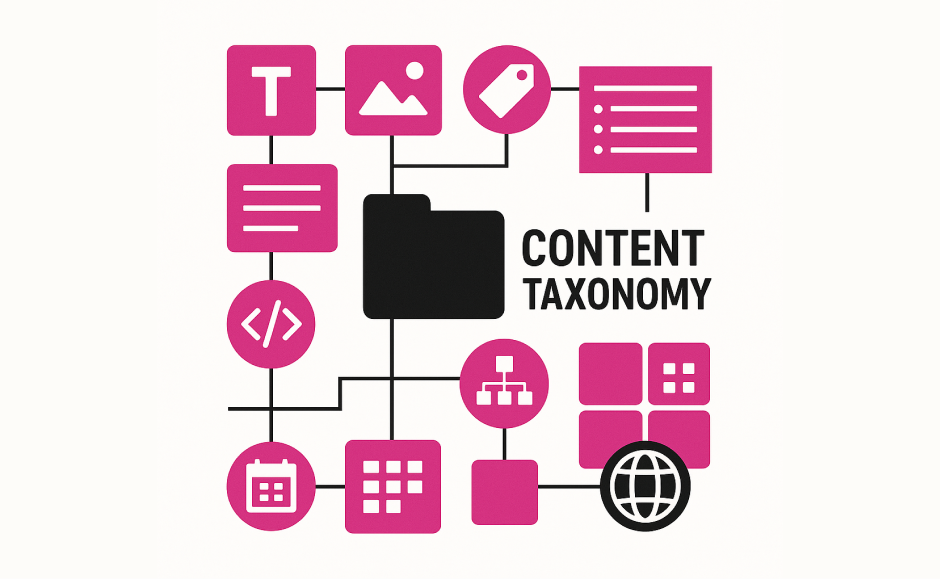
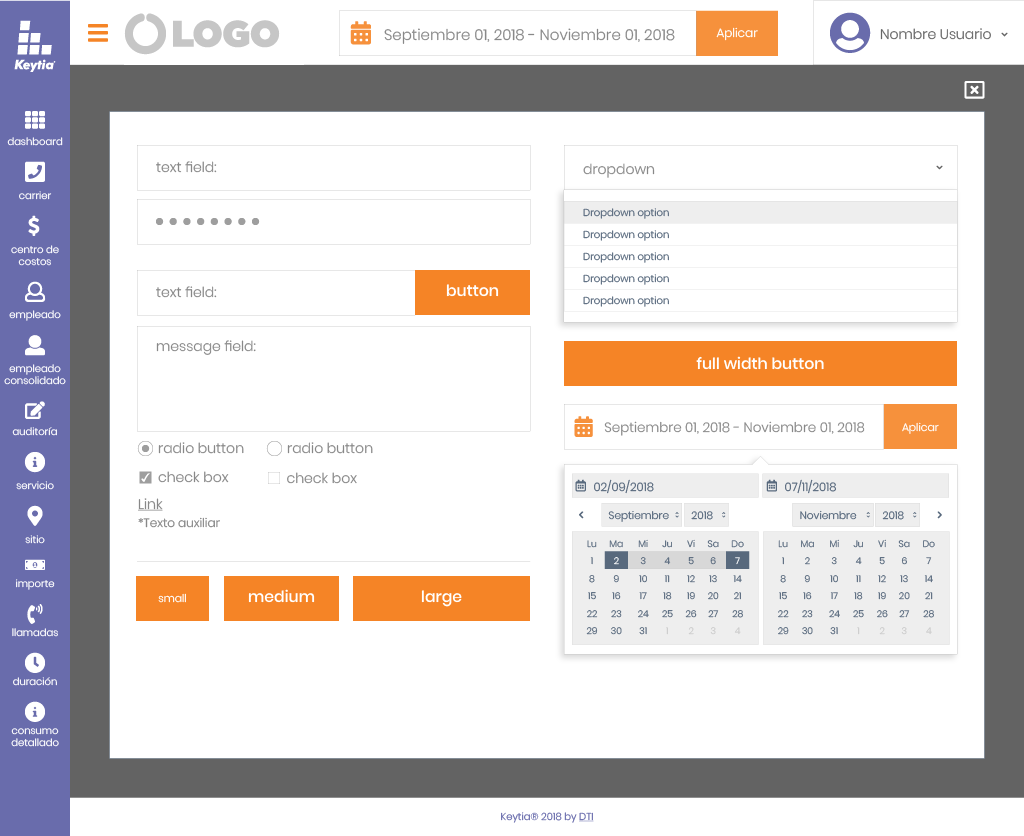
That’s worth sitting with for a second: a design system isn’t a sticker sheet of colors and components. It’s a contract. A well-built one specifies not just what a button looks like, but how it behaves, what it needs to stay accessible, what content rules apply, and what happens at the edge cases nobody wants to think about. That contract is exactly what keeps generated work — AI-assisted or not — tethered to a specific product with a specific point of view, instead of drifting toward what people are already calling “AI design slop”: interfaces that look technically fine and completely generic, because they’re really just the statistical average of every interface a model has ever seen. A strong, well-governed system is one of the few real defenses against that drift. A weak or half-adopted one just lets the model’s defaults quietly take over.
Where That Contract Is Headed Next
Here’s where the idea goes one layer deeper. An InfoQ piece makes the case that AI code generation has changed the economics of a shared component library enough that it may no longer be worth maintaining one at all for simple components. Instead of shipping component *code*, centralize the design tokens, the machine-readable guidelines, the accessibility and engineering rules, and an automated verification suite — then let teams regenerate components on demand from those rules, checked by automated tests rather than trusted blindly. It’s not a rejection of “design system as contract” — it’s the same idea taken further. The contract stops being a component library a human browses and becomes a rule set a model is required to generate against, and a test suite that catches it when it doesn’t. The piece is honest about where this breaks down: genuinely complex widgets — data grids, date pickers, comboboxes — are still better served by a maintained shared library, because accessibility and behavior there are hard enough that AI code generation doesn’t reliably get them right yet.
There’s already a working example of the governance-first version of this paying off, not just a theory. One team described building their design system directly into the tools their non-designers use to generate on-brand work, through what they called an org-wide “skill library”, and said it let people who’d never touched a design tool produce materials that used to take a small brand team days — specifically because the system itself was embedded as the constraint, not bolted on as a review step afterward. That’s the sequencing argument from above, now with a name and a result attached to it: govern upstream, generate downstream, and the speed stops being the risk.
Where To Start
So if your team is about to lean harder on AI-assisted generation, the sequencing matters more than the tool you pick. Start by auditing adoption and alignment, not by shopping for the next plugin — if only a tenth of your org is genuinely wired into the system today, pouring more generation volume through it just widens that gap faster. Write your component rules as contracts, not just visuals: behavior, accessibility, content, and edge cases spelled out clearly enough that a human and a model can both build against them without guessing. Put a review gate on AI-assisted design output the same way good engineering teams already gate AI-written code — someone accountable checks it against the system before it ships, every time, not just when something looks obviously off. And treat contribution governance as urgent rather than eventual: decide who can add to the system and how quality gets checked, because AI will happily help *anyone* contribute faster — including the contributions you didn’t actually want.
The open question for 2026 isn’t whether to adopt AI-assisted design. It’s whether your design system is structured as something a model — and the regeneration tools now being built around treating code as disposable — can actually be held accountable to.
Every wave of new tooling tests whether an organization’s design governance was real or just aspirational. No-code did it. Low-code did it. Generative AI is just doing it louder and faster, with a lot more screens produced per afternoon. The teams getting genuine value out of AI generation right now aren’t the ones with the cleverest prompts — they’re the ones who’d already done the unglamorous governance work long before AI showed up to test it. If that’s not your team yet, 2026 is a reasonable year to start, because from here, the tools are only going to move quicker.
Final thought
AI didn’t create the governance gap in design systems — it just turned up the volume on it. The teams that come out ahead in 2026 won’t be the ones with the slickest prompts; they’ll be the ones who treated adoption and alignment as the real work all along.
What Businesses Are Getting Wrong
Most organizations approach AI like this:
“Where can we add it?”
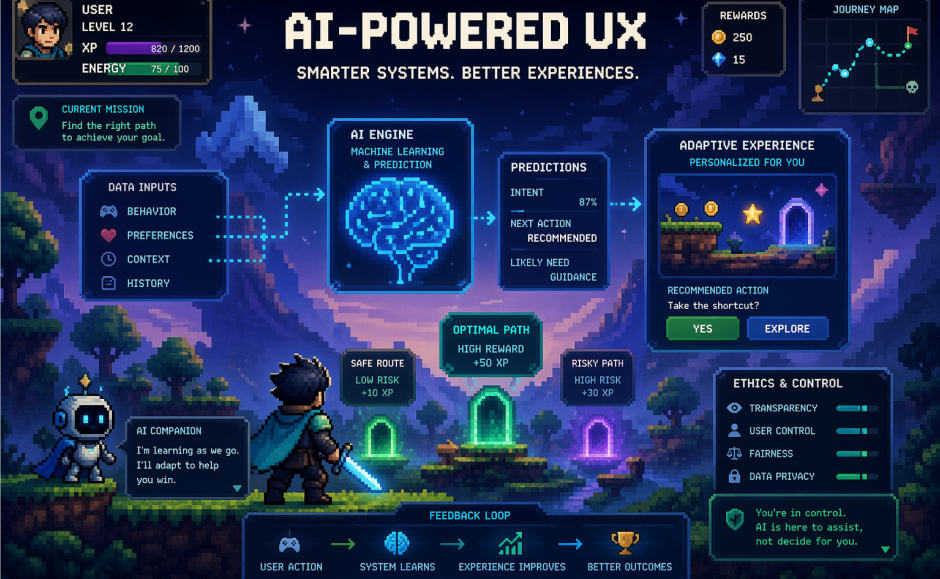
That’s the wrong question. AI is not a feature layer it’s a system layer.
Common mistakes:
- Over-automating without user trust
- Prioritizing capability over clarity
- Ignoring UX strategy entirely
AI without UX is just expensive confusion.
And in many cases, it becomes something worse: a system users don’t understand, but are forced to rely on.
The Opportunity: Designing for Transformation
AI is not just changing products. It’s changing how businesses operate. This is where the real opportunity lies.
At Distrito Studio, we approach AI not as a tool, but as a strategic capability:
- Aligning business goals with intelligent systems
- Designing culturally-aware AI experiences
- Enabling organizations to evolve, not just optimize
Because the future isn’t about more features. It’s about better decisions.
And those decisions happen at the intersection of human behavior, system intelligence, and thoughtful design.
Final Thought
The future of UX is not designing for users; it’s designing how humans and systems think together and that requires more than good interfaces: it requires responsibility, strategy, and clarity: because in AI-powered experiences, what you design doesn’t just guide behavior, it defines it.
Asvid Balleza
Sr. UX & Product Designer | Founder of Distrito Studio
NN/g UX Management Certified
Clarity, consistency & people — human-centered, tech-enabled design for enterprise teams.