AI Doesn’t Design, But It Changes Everything About UX
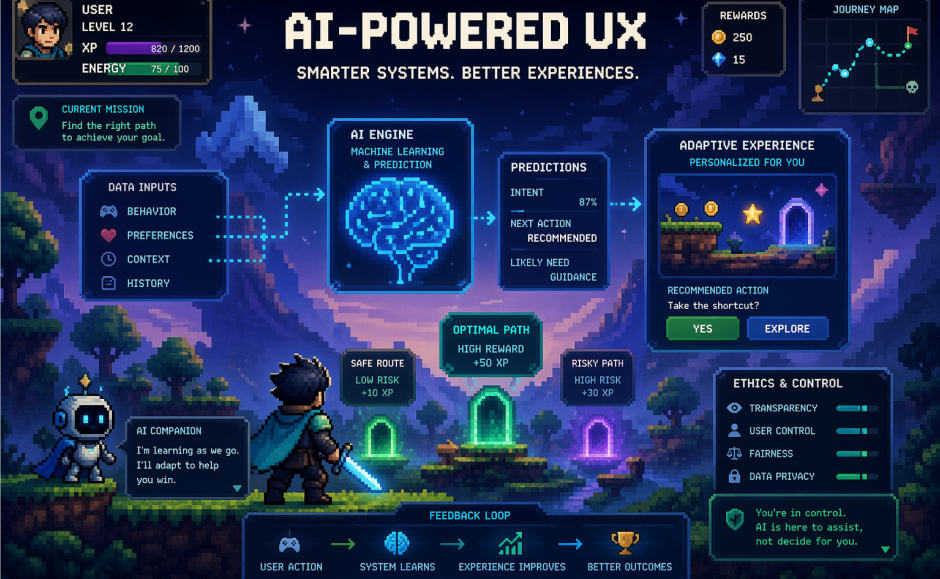
AI is not changing UX because it generates interfaces. It’s changing UX because it makes decisions before users do.
For years, we’ve designed flows, structured paths where users move from point A to point B. But with AI/ML systems, the experience is no longer static or even predictable. It adapts, suggests, nudges, and sometimes decides.
That changes everything.
At Distrito Studio, we often say: this is not a tool shift, it’s a paradigm shift. And if you’re still designing AI experiences like traditional products, you’re already behind.
What AI/ML-Powered UX Actually Means
Let’s clear something up.
AI in UX is not:
- Adding a chatbot to your homepage
- Auto-generating UI components
- Labeling features as “smart”
AI-powered UX is:
- Predictive systems that anticipate intent
- Adaptive interfaces that evolve per user
- Decision-support ecosystems that reduce cognitive load
This is the difference between interaction and intelligence.
When working on enterprise platforms like those at Visa Inc., the challenge wasn’t designing more screens, it was designing how complex machine logic becomes understandable, actionable, and trustworthy for real users making high-stakes decisions.
From Flows to Systems: The Real Shift
Traditional UX was about clarity in navigation. AI-powered UX is about clarity in behavior.
We’re no longer designing linear journeys. We’re designing systems that learn from user behavior, generate probabilistic outcomes, continuously reshape the experience. But here’s where it gets complex, and where most teams get it wrong.
Should systems loop… or should they cohere?
AI systems often fall into one of two patterns:
- Looped systems: continuously reinforcing what they already “know” about the user
- Coherent systems: integrating broader context, diversity of data, and evolving intent
Looped systems create efficiency, but also risk: echo chambers, over-personalization, and reinforcing bias.
Coherent systems aim for balance, but require: intentional design, ethical guardrails, and transparency in decision-making.
This is where UX becomes critical ,because you’re no longer designing screens, you’re designing how a system learns, how it adapts and how it avoids narrowing the user’s world.
The risk isn’t that AI makes mistakes.
It’s that it confidently repeats them at scale.
Bias and Ethics Are Not Edge Cases
When systems are trained on biased data, they don’t just reflect bias, they operationalize it.
And in bi-cultural and diverse markets like Texas and Latin America, this matters even more.
Designers must ask:
- What patterns are we reinforcing?
- What options are we hiding?
- Are we guiding users—or limiting them?
AI UX is not neutral and pretending it is… is a design failure.
The Designer’s New Responsibility
Designers are no longer just crafting usability. We’re shaping decision environments and that comes with new responsibilities:
1. Explainability
Users need to understand why something is happening. If a system recommends, flags, or prioritizes, clarity is not optional.
2. Trust Design
Trust is no longer built through polish.
It’s built through transparency, consistency and feedback loops.
3. Control vs Automation
Not everything should be automated.
Great AI UX defines:
- When the system acts
- When the user decides
- And when both collaborate
4. Designers as the Mediators Between Business and Humans
AI systems are incredibly powerful at optimizing for engagement, conversion and retention.
Which means they can easily drift into coercive patterns: over-personalization that pressures decisions, manipulative nudging and aggressive recommendation loops.
Left unchecked, this becomes aggressive marketing disguised as intelligence.
And that’s a problem because it erodes trust, it reduces user autonomy, and it prioritizes short-term gains over long-term relationships
If we’re not careful, AI doesn’t evolve the experience, it regresses it.
It takes us back to a digital version of the stone age: louder signals, more pressure, less respect for user intent.
The Designer’s Role in This Tension
Designers are uniquely positioned to act as the middle ground between business pressure for growth and real human needs.
At Distrito Studio, this is not optional, it’s part of the role.
We actively challenge:
- Where is this recommendation coming from—user value or business pressure?
- Are we guiding, or are we pushing?
- Are we helping users decide, or deciding for them?
Practical Ways Designers Moderate This
- Designing opt-out and control mechanisms
- Making intent visible (“Why am I seeing this?”)
- Avoiding dark patterns disguised as AI
- Introducing friction where it protects the user
- Ensuring alternative paths, not just optimized ones
Because real innovation is not:
Making systems more persuasive
It’s:
Making systems more responsible
The Shift in Mindset
Designers are no longer just advocates for usability. We are translators of intelligence, guardians of trust and moderators of power between systems and humans.
And in AI-powered products, that responsibility defines the difference between meaningful innovation vs. scalable manipulation.
In the end, AI will amplify whatever we design into it.
So the question is not:
“What can this system do?”
But:
“What should it do—and who is making that decision?”
Real-World Case Studies Worth Exploring
If you want to understand this shift in action, look at:
- Netflix → Recommendation systems that balance personalization with discovery
- Spotify → AI-driven curation like Discover Weekly (loop vs exploration tension)
- Amazon → Predictive suggestions influencing purchasing behavior
- Google → Search and ranking systems shaping information access
These aren’t just features. They are systems shaping decisions at scale.
Designing Intelligence: My Work in Practice
In my experience working on enterprise ecosystems and AI-powered platforms, the challenge has never been about adding intelligence—it’s about making intelligence usable.
While working on commercial platforms and intelligent systems, I focused on:
Translating ML into UX
Partnering with data scientists to turn:
- Predictive models
- Behavioral analytics
- Complex datasets
into:
- Clear interfaces
- Actionable insights
- Understandable system feedback
Reducing Cognitive Load
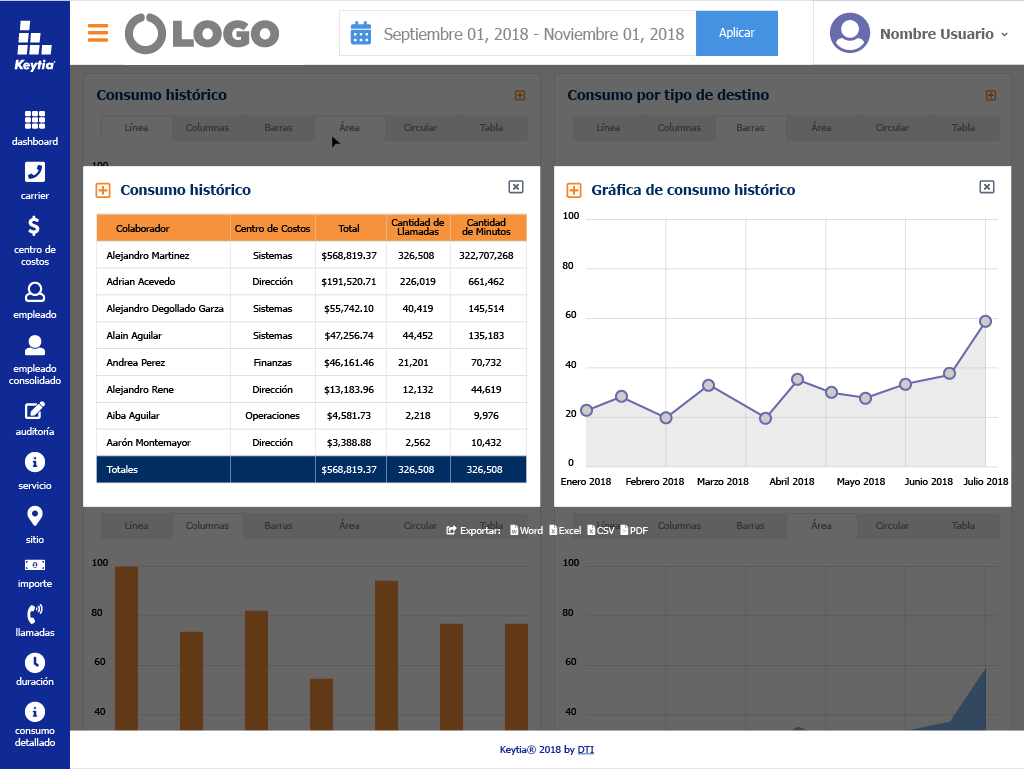
Designing dashboards and workflows that: surface what matters most, prioritize decisions, and eliminate noise
The result: Faster decision-making, higher adoption, and reduced friction across complex tasks.
Designing Predictive Experiences
Creating systems that: anticipate user needs, personalize flows, and guide users without overwhelming them.
The result: More efficient onboarding, increased engagement, and stronger alignment between business goals and user behavior
Building Scalable Systems
Establishing UX governance, design patterns , and system logic consistency.
The result: Faster delivery cycles, cross-team alignment, and scalable, repeatable experiences.
What Businesses Are Getting Wrong
Most organizations approach AI like this:
“Where can we add it?”
That’s the wrong question. AI is not a feature layer it’s a system layer.
Common mistakes:
- Over-automating without user trust
- Prioritizing capability over clarity
- Ignoring UX strategy entirely
AI without UX is just expensive confusion.
And in many cases, it becomes something worse: a system users don’t understand, but are forced to rely on.
The Opportunity: Designing for Transformation
AI is not just changing products. It’s changing how businesses operate. This is where the real opportunity lies.
At Distrito Studio, we approach AI not as a tool, but as a strategic capability:
- Aligning business goals with intelligent systems
- Designing culturally-aware AI experiences
- Enabling organizations to evolve, not just optimize
Because the future isn’t about more features. It’s about better decisions.
And those decisions happen at the intersection of human behavior, system intelligence, and thoughtful design.
Final Thought
The future of UX is not designing for users; it’s designing how humans and systems think together and that requires more than good interfaces: it requires responsibility, strategy, and clarity: because in AI-powered experiences, what you design doesn’t just guide behavior, it defines it.
Asvid Balleza
Sr. UX & Product Designer | Founder of Distrito Studio
Designing business transformation through culturally-aware strategy and inclusive digital experiences.